Visual Reference
Service Planning & Execution
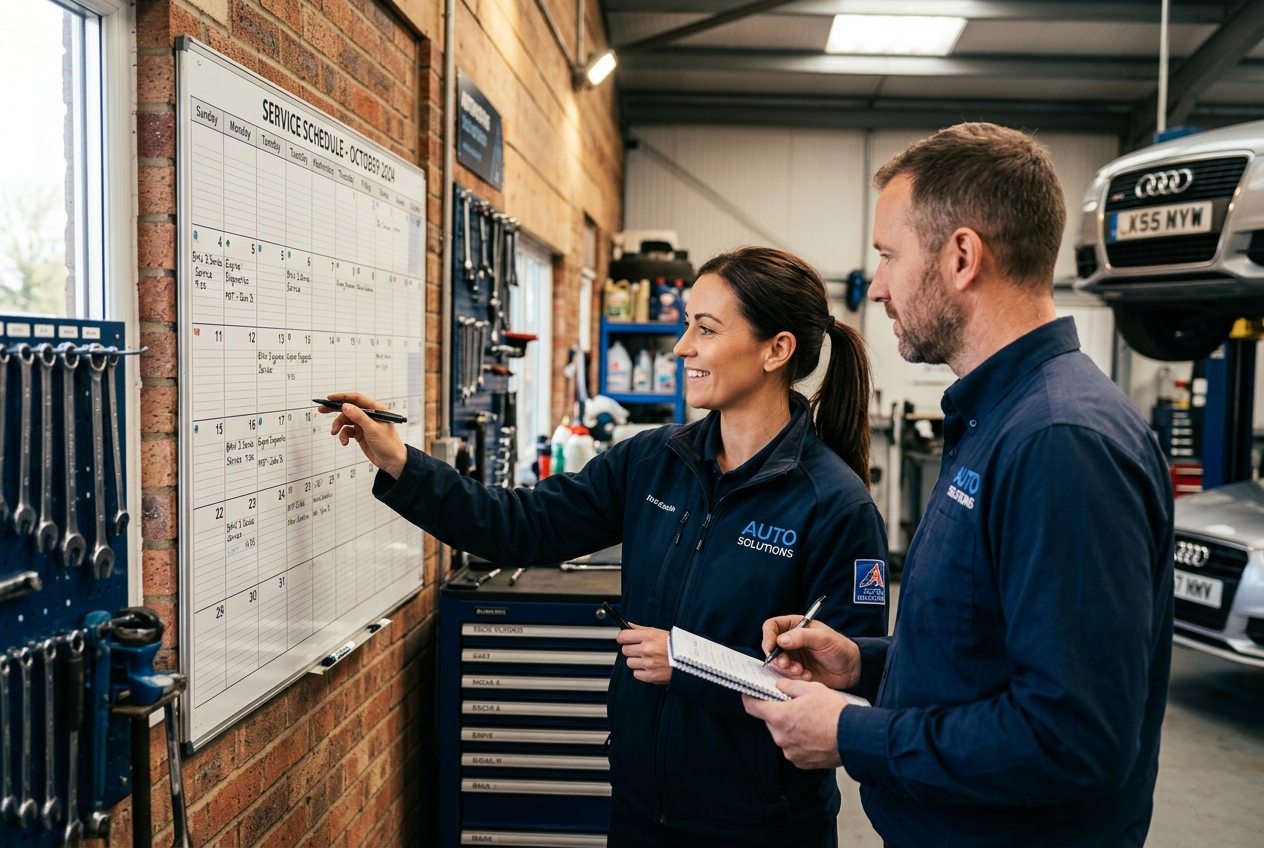
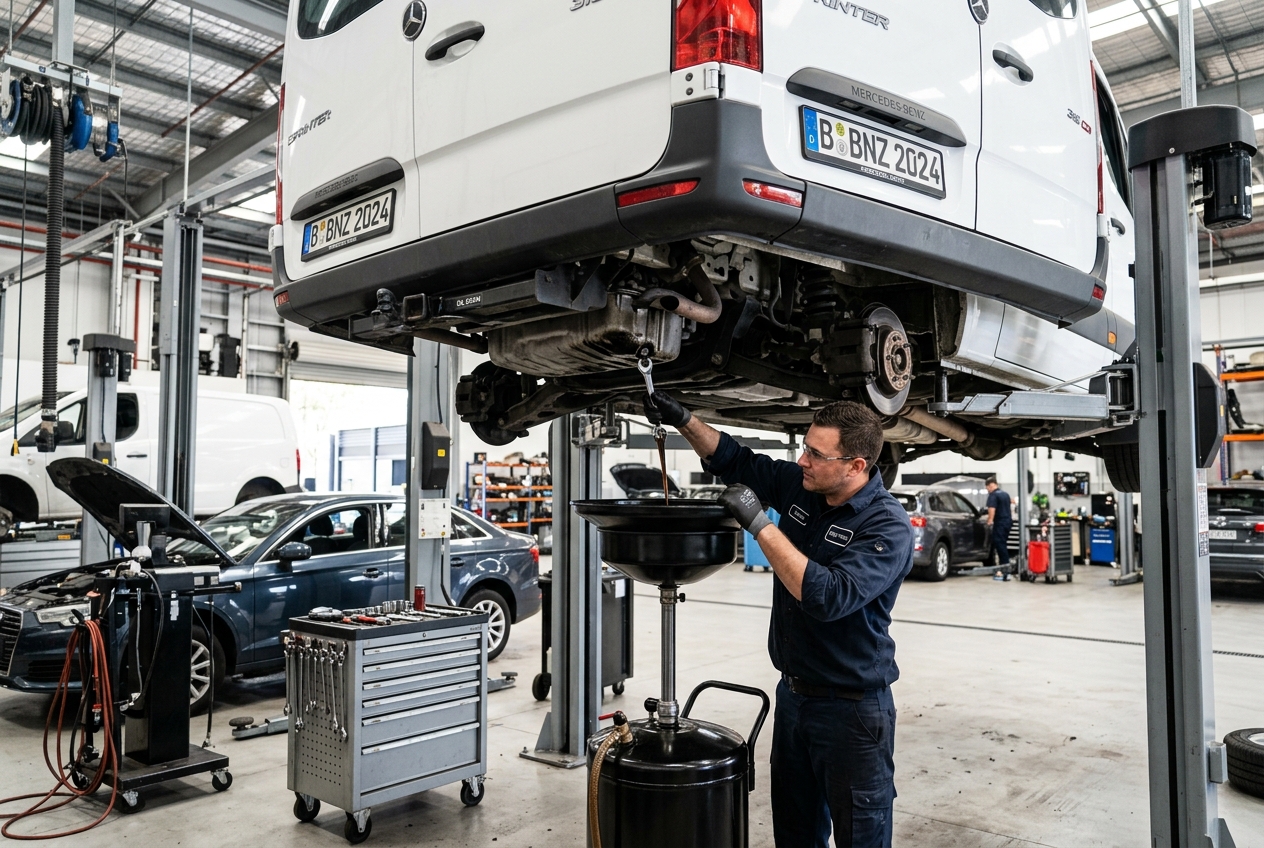
Proper maintenance and scheduling ensures your Sprinter is ready for the long haul.
Specific guidance on MB 229.51 and 229.52 for common Sprinter diesel engines. Engine details, approximate capacities (always double check), verification steps, and practical service notes.
These are low SAPS (low ash) oils required for Sprinters with diesel particulate filters (DPF). Using the wrong specification can harm the DPF and may affect warranty coverage.
Low ash oil required for most DPF equipped Sprinters. Backward compatible in many cases with earlier low ash requirements.
Current preferred spec on many engines. Better oxidation stability and fuel economy. Often listed for OM642, OM651, and required or preferred on OM654.
Full synthetic low SAPS. The most commonly specified viscosity for these diesel engines.
Mercedes updates the official list. Always confirm the exact requirement for your engine code and model year.
~12.5 liters (13+ quarts) service fill. Many owners and kits use 13 L. Confirm with dipstick after refill and engine run.
~11.5 liters (12.15 quarts) for most RWD/AWD models. Verify exact amount for your configuration.
~10.5 liters (~11 quarts). Newer engine: use oils that explicitly carry the 229.52 approval.
Important: These are reported service capacities from supplier data and owner reports. Always fill to the correct level on the dipstick with the vehicle level and engine warm (per your manual). Over- or under filling can cause problems.
Generic advice like "use 5W-30 diesel oil" is not enough. Different engines and years have specific requirements to protect the DPF and maintain warranty.
Availability and exact formulations change. Confirm the approval for the bottle you buy.
Confirm 229.51 or 229.52 (or current BeVo) for your exact engine and model year before buying oil.
Use the correct oil capacity and OEM or approved filter for OM642, OM651, or OM654.
Replace drain plug washer. Torque to manufacturer spec. Reset service interval if equipped.
Inspect cooler lines and housing after service. Address seepage early.
Each of the three common Sprinter diesel engines has its own oil capacity and its own nuances. The table below reflects service fill volumes, the amount of oil you put in after draining. Always confirm on the dipstick after a 5-minute warm idle and a second check with the engine off for 5 minutes.
Service fill: approximately 11.5 liters (12.2 US quarts) for most RWD configurations. AWD variants may run closer to 12 liters due to a different sump. Required spec: MB 229.51 minimum, 229.52 preferred. Viscosity: 5W-30 is the factory call for most markets. If you regularly operate above 95°F or tow heavy loads in the American Southwest, some Sprinter shops move to 5W-40 that carries the 229.51 approval, though 5W-30 is the Mercedes specification for this engine. Never go thicker without confirming the approval stamp on the bottle.
Service fill: 12.5 to 13 liters (13.2 to 13.7 US quarts). This engine holds more oil than most owners expect, and the common mistake is stopping at 12 liters, which leaves the level below the MIN mark. Spec: MB 229.51 or 229.52. Viscosity: 5W-30 is specified. In climates that stay below freezing regularly, 5W-30 full synthetic starts faster and protects better at cold crank than a heavier grade. The V6 is used in 2500 and 3500 chassis Sprinters from 2007 through the early 2020s, so most fleet vans on the road today use this engine.
Service fill: approximately 10.5 liters (11.1 US quarts). This is the newest architecture in the Sprinter lineup. Mercedes specifies MB 229.52 only for this engine, 229.51 is not sufficient. Viscosity: 5W-30. The OM654 uses a steel piston design that runs tighter tolerances, and a thicker or lower spec oil can accelerate wear on the cylinder walls. If your van is a 2019 or newer 2500 without the V6 badge, you almost certainly have the OM654. Verify by checking the sticker inside the driver's door jamb or the ASSYST menu.
Neither grade helps if the oil doesn't carry the correct MB approval. A 5W-40 without the approval stamp is worse than a 5W-30 that has it.
These are the parts and torques that shops get wrong most often. Getting them right prevents oil leaks, stripped threads, and the kind of slow drip that turns into a $900 repair.
M12 drain plug. Torque to 25 Nm, not more. The aluminum pan threads strip easily if you gorilla-grip it. Replace the copper drain plug gasket every oil change; they cost about $1.50 each from IDParts or FCP Euro. The part number for the OEM copper washer is N 007 603 014 100. Using the old gasket is how slow seeps start.
M14 drain plug. The V6 uses a slightly larger plug and a different gasket profile. Torque to 30 Nm. Same rule: new copper washer every time. The OEM washer PN is N 007 603 016 100. Many FCP Euro oil change kits include the washer, check before ordering additional hardware.
M12 plug, same torque as OM651. The OM654 uses a plastic oil drain plug insert on some builds, inspect it before re-torquing and replace the full plug (PN A 000 997 24 30) if the insert looks cracked or deformed.
The Mann HU 716/2 x is the workhorse filter for most Sprinter diesels. It's a canister-style element. Torque the filter housing cap to 25 Nm. The OEM Mercedes filter (A 651 180 01 09 for OM651) fits identically and costs about $12-18 depending on source. Replace the O-ring on the housing every other change at minimum; they harden and crack, leading to leaks above the filter.
The OM654 uses a different filter cartridge. The Mann HU 7028 z is the common aftermarket reference. OEM PN: A 654 180 00 09. Housing cap torque: 25 Nm. Because this engine is newer, fewer shops stock the correct element on the shelf, order it in advance rather than discovering the problem mid-drain.
Overfilling by even half a liter can force oil mist past the piston rings into the combustion chamber. That unburned oil coats the DPF substrate and triggers a regeneration cycle. Repeat overfills shorten DPF life from a typical 150,000-mile service interval down to 80,000 miles or less. A DPF replacement on a Sprinter runs 1,800 to 3,200 at an independent shop, more at a dealer. Fill to the dipstick MIN mark first, run the engine five minutes, then top off toward MAX.
Pouring a ACEA A3/B4 oil (the older European spec) into a DPF equipped Sprinter is a mistake that's easy to make because the label looks similar. A3/B4 oils have higher sulfated ash content, the exact compound that plugs DPF cells. If a dealer finds high ash oil deposits during warranty work, they can and do deny coverage. The bottle must say MB 229.51 or 229.52 explicitly. "Meets" or "compatible with" language is not sufficient for warranty protection.
Modern full synthetic 229.52 oils are compatible with one another chemically, but mixing brands at a top off is not ideal practice. The main risk is diluting the additive package, antiwear and detergent additives from different formulations can interact and reduce effectiveness by 10 to 15% in some lab tests. If you need to top off in a pinch, using the same spec (229.52) from any approved brand is far better than skipping the top off entirely. Just don't make mixed brand fills a habit across full drain cycles.
The Sprinter's ASSYST (Active Service System) calculates oil change intervals dynamically using driving conditions, engine temperature, and fuel consumption. In ideal highway conditions, it can push intervals to 15,000 to 20,000 miles. For most real world Sprinter operators, tradespeople, delivery routes, stop and go urban driving, that number is too optimistic.
The ASSYST display counts down to the next service in days and miles. When it hits zero, it shows a yellow wrench and a mileage figure. The system resets after an oil change using the steering wheel controls: hold the Reset button while in the instrument cluster menu until the service indicator clears. This takes about 15 seconds and does not require a scan tool on most NCV3 models.
If your driving is mostly highway with consistent loads, ASSYST intervals in the 10,000-12,000 mile range are reasonable. Use that as an upper limit, not a target. Check the oil color and level at every fuel stop, a Sprinter burning or leaking oil between changes needs the interval cut, not extended.
At high mileage, internal wear creates more combustion blowby, that means more contaminants in the oil, faster. The ASSYST system does not know about worn piston rings. Many fleet operators running high-mileage OM642 engines cap their intervals at 7,500 miles regardless of what the display shows. The cost of the extra oil change ($80-140 in parts) is trivial against an in-frame engine rebuild at $8,000-15,000.
Short trips under 10 miles never fully heat the oil, leaving moisture and fuel dilution in the crankcase. Cold climates compound this. If your Sprinter does daily urban delivery routes, treat it like a severe-service engine and change the oil every 5,000-7,500 miles. The engine doesn't know the ASSYST is watching. It only knows what the oil looks like at the molecular level, and short-trip oil degrades faster than the algorithm predicts.
A simple starting list of common capacities and specs compiled from publicly available data for popular Sprinter engines. It is not a complete service manual.
Print it if it helps. Keep it handy as a reminder to always verify with your own manual and dipstick.
Email with "Cheat Sheet" in the subject. We will send a basic version.
Proper maintenance and scheduling ensures your Sprinter is ready for the long haul.
We may earn a commission if you purchase through some of the links below. This helps support the site and does not change the price you pay. We only mention sources that many Sprinter owners actually use.
Large selection of Sprinter parts. Known for a lifetime replacement program on many items (return used oil, filters, brakes for credit in some cases).
Diesel focused maintenance kits that often include oils and filters meeting the relevant specs.
Owner forums where real experiences with different oils and procedures are discussed.
Supplier often used for certain NCV3 and older chassis components.
When you know your engine, the quickest path is usually to take the details from the sections above and search or ask the partner sites directly for the matching kit.
Beyond the free troubleshooting logs, we can provide direct introductions for fleet repairs, OEM parts distribution networks, and mechanical diagnostic consulting.
Send your engine, year, mileage, and what you're dealing with. We'll reply with specific recommendations and direct links to the right parts or kits from our partners.
For a flat fee we review your situation in detail and send back written recommendations, prioritized next steps, or a maintenance plan outline tailored to your van.
If you're interested in field work, mobile services, sales, parts, or fleet maintenance opportunities, let us know. We can make introductions or discuss collaboration.
All options start the same way: tell us about your van and what kind of involvement you're interested in. We will be clear upfront about what any paid service or introduction includes.
See the full Sprinter network for related topics: Brakes, DEF, DPF, Bulbs.
Fill out the basics below (or just email). The more details you include (engine, year, what you're trying to solve, location if relevant for shop recommendations), the better we can point you in the right direction or quote the right level of help.